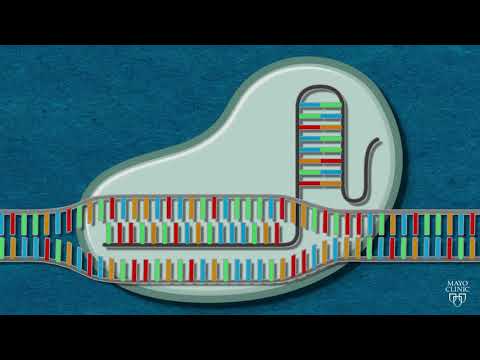
CRISPR is a powerful gene-editing tool that works like molecular scissors. It can cut DNA and help scientists edit genes. But CRISPR has one problem: it makes a full cut in the DNA, and sometimes the cell repairs this cut in the wrong way. This can lead to mistakes.
Because of this, scientists have created newer and safer gene-editing tools. These new tools work like a “Molecular Word Processor” instead of scissors. They can edit DNA without making big cuts. This makes gene editing more accurate and less risky.
CRISPR-Cas9: The Molecular Scissors
CRISPR-Cas9 was the first major
gene-editing tool.
How it works:
- A guide RNA finds the place in the DNA that needs
editing.
- The Cas9 enzyme cuts both strands of the DNA.
- The cell repairs the cut, but sometimes the repair is
messy or wrong.
This method is powerful but not
always safe because it creates a double-strand break.
Base
Editing: The Molecular Pencil
Base Editing was the next
improvement. It does not cut the whole DNA. Instead, it changes just one letter
of the DNA.
How it works:
- A modified Cas9 makes a small nick in one DNA strand.
- An enzyme changes one DNA base to another (like C to T
or A to G).
Why it matters:
Many diseases are caused by a single wrong DNA letter. Base editing can fix
these “DNA typos” safely.
Prime
Editing: The Molecular Word Processor
Prime Editing is the most advanced
tool so far. It works like the “Find and Replace” feature in a computer.
It can:
- Change any DNA letter
- Insert small DNA sequences
- Delete small DNA sequences
all without making a dangerous double-strand cut.
Prime Editing uses three parts:
- Nickase Cas9
– cuts only one DNA strand
- Reverse Transcriptase
– writes the new DNA
- pegRNA
– guides the editor and provides the corrected DNA sequence
Steps:
- The pegRNA guides the editor to the target.
- Nickase Cas9 cuts one strand.
- The Reverse Transcriptase writes the new DNA.
- The cell replaces the old DNA with the new, corrected
version.
This method is clean, safe, and very
accurate.
Why
Prime Editing Is Important
Prime Editing can do:
- Substitutions (change one base)
- Insertions (add small pieces)
- Deletions (remove small pieces)
It can fix around 89% of known
genetic mutations.
And it does this without making a full cut in the DNA.
Future
Tools: Transposons and TIGR
Scientists are working on even newer
systems:
- Transposon-based editors
These may help insert large pieces of DNA, like whole genes. - TIGR systems
These are very small proteins that may edit any part of the genome easily.
These tools could make gene editing
even more powerful and flexible.
Prime
Editing and Sickle Cell Disease
Sickle Cell Disease happens because
of one small mistake in the HBB gene.
This single-letter change causes red
blood cells to become sickle-shaped.
Prime Editing can correct GTG back
to GAG by changing just one base.
Why it is better than CRISPR-Cas9:
- CRISPR makes a full cut; Prime Editing makes only a
small nick
- Prime Editing is more accurate
- Prime Editing causes fewer mistakes
How treatment works:
- Doctors collect the patient’s blood stem cells.
- They edit the cells using Prime Editing.
- The corrected cells are placed back into the patient.
- These cells can make healthy red blood cells for life.
This could be a permanent cure.
The
Future of Gene Editing
CRISPR started the revolution.
Base Editing made it cleaner.
Prime Editing made it precise.
Soon, gene editing may cure
diseases, help in drug discovery, and prevent genetic problems before they
occur.
We are entering a future where DNA
can be edited as easily as editing words in a document.
Table: Major Fields of Biotechnology
and Their Key Applications
|
Biotech Field |
Key Focus |
Important
Applications |
Examples |
|
Medical
Biotechnology |
Developing therapies &
diagnostics |
Vaccine development, gene therapy,
disease diagnostics |
mRNA vaccines, CRISPR-based
therapies |
|
Agricultural
Biotechnology |
Crop improvement & protection |
High-yield crops, pest-resistant
plants, stress-tolerant varieties |
Bt Cotton, Golden Rice |
|
Industrial
Biotechnology |
Large-scale bio-processing |
Enzyme production, biofuels,
bioplastics |
Bioethanol, biodegradable plastics |
|
Environmental
Biotechnology |
Pollution control using microbes |
Wastewater treatment,
bioremediation, bio-filtering |
Oil spill clean-up, heavy metal
removal |
|
Food
Biotechnology |
Food quality & preservation |
Fermentation, probiotic foods,
nutritional enhancement |
Yogurt, cheese, fortified foods |
|
Marine
Biotechnology |
Exploring marine organisms |
Novel enzymes, pharmaceuticals,
bioactive compounds |
Anticancer compounds from algae |
|
Microbial
Biotechnology |
Using microbes for innovation |
Antibiotics, enzyme production,
fermentation industries |
Penicillin, lactase enzyme |
Advanced Biotechnology Quiz
15 MCQs for CSIR-NET / GATE / DBT-JRF practice. Choose one answer for each question, then click Submit.